Move Fast, Don't Rush
Living Well

Written by: Meg Sharp, Fitness and Wellbeing Consultant, Cambridge Group of Clubs
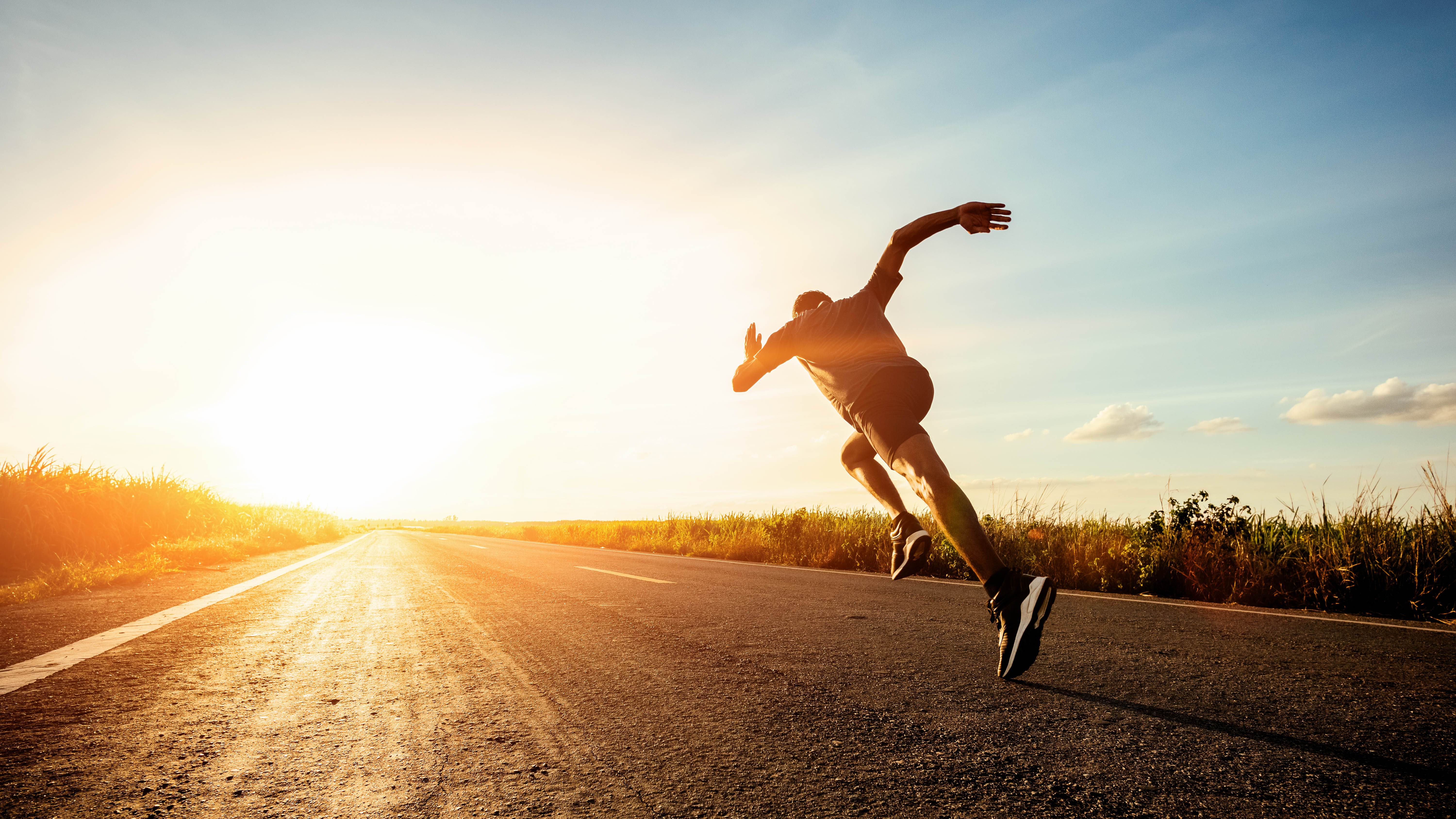
Picture Andre De Grasse during the men’s 200m semifinals at the 2016 Olympics. As he crosses the finish line, legs pounding, churning with unbelievable power and speed, he turns and smiles at Usain Bolt. Smiles. Who smiles during an all-out effort with so much on the line?! The most powerful, efficient, well-trained athletes. That’s who.
Check out the CBC Sports video here for the men’s 200m semifinal showdown between Andre De Grasse and Usain Bolt at the 2016 Rio Olympic Games.
Now picture ourselves: Days and lives brimming with so many important tasks. We need to bring our A-game to all that we do. Every ounce of our energy – mental, physical, and emotional – fully committed to being and achieving the best. Smiling is a luxury we don’t – can’t – afford ourselves.
Are we moving fast? Or are we rushing? There’s a powerful difference.
This is what rushing looks like: A fevered, forward pitch. All cylinders firing. We are GETTING IT DONE! Hammering out a workout, downing a coffee, finishing a report, jumping on the Go Train, firing off emails, grabbing a quick (QUICK!) bite with a colleague, and then chopping broccoli in a frenzy trying to get a healthy dinner on the table. As we must! There is always an impossible amount to do. And never enough waking hours. So how on earth can we afford to slow down?!

What if we don’t have to slow down?
What if – like an Olympic runner – we can sprint AND relax on our way to cross the numerous finish lines of our day?

The best – the fastest, most powerful, most efficient – athletes train themselves to do this. Watch the winners. You will of course see incredible tension patterns generating force and speed. You will also notice areas of smooth, fluid relaxation. Ultimate performance requires both. Some call it flow, I call it brilliant.

I find this concept and practice – when I remember to do it – nothing short of transformational.
Ready to try it?
Go through the steps below when you’re in a relatively relaxed state. Then try the same steps the next time you catch yourself feeling a little – or a lot – frenzied.
Start with your breathing. Take a deep breath in – through your nose, if you can. A powerful breath in signals your body it’s GO TIME. The race has begun and it is to be won. Strong inhalations keep you sharp, focused, agile, and quick witted.

Exhale deliberately. Flex the muscles through your diaphragm, rib cage, and abdominals. A powerful exhalation does a number of things: It naturally increases the capacity of your next inhale; More air, more oxygen, better focus and execution. It grounds you; Making you feel centered, capable, unstoppable. It encourages stimulation of the parasympathetic arm of your nervous system. (This is opposite of the sympathetic fight/flight reaction). Activation of the parasympathetic nervous system is required to facilitate relaxation. Yes – it can serve to slow you down – but it doesn’t need to. Instead, it can take a bit of heat out of your fight or flight state. You want to be in the amber zone. Not the red zone. And you want to relax a few things, remember?
So, you’re breathing. Deep, powerful, deliberate breaths. Feeling strong and grounded.

Next, relax your face. Unclench your jaw and teeth, soften your cheeks, smooth your forehead. Notice how the oxygen coming in through your nose fills and relaxes your sinuses. Your vision is clearer. The mind behind your face quiets a little. Briskly walking to a really important meeting? Your face doesn’t need to flex.
Relax your hands, wrists, and forearms. Driving, chopping, typing? You can do all these things – beautifully – while still keeping your fingers, wrists, and hands relatively relaxed.

Drop your shoulders. Use that exhalation to ease your shoulder blades away from your ears. Breathe through your abdomen, the base of your ribs, and open up your chest. Your spine tends to flex forward during moments of great effort and concentration. Breathe yourself tall. Create space in your spine.
Focus completely on the task at hand. Removing the static in the background not only reduces your stress levels, it improves your performance and efficiency. Have you ever made a silly mistake while rushing? One that might not be a big deal, but ultimately costs you a few precious minutes? Being mindful minimizes the risk of missteps: physical, mental, and emotional.
Don’t rush. Be fast and relaxed.
(Don’t tell anyone: you might get even faster.)
4250