How to Lose Weight Without Losing Muscle
Losing weight is one thing. Losing the right weight is where things get interesting.

From the desk of Meg Sharp, MSc, Fitness & Health Consultant, Cambridge Group of Clubs
If weight loss is the goal, the number on the scale tells only part of the story. What you lose matters. Preserving muscle while reducing body fat can help protect your strength, energy, mobility, metabolic health, and confidence.
What is High-Quality Weight Loss?
“High-quality weight loss” essentially refers to weight loss whereby muscle is preserved as much as possible. This translates to maintenance of strength, power, agility, energy, mental acuity, and physical self-confidence. It also preserves bone and metabolic health to a much greater degree than when fat and muscle are lost in equal parts.

We too often define a weight loss protocol as successful simply because a meaningful amount of weight was lost. This misses the mark: we must also account for how much of the weight was fat and how much was muscle.
Why Preserving Muscle During Weight Loss Matters
Skeletal muscle does more than move our bodies: it plays a central role in glucose disposal, insulin sensitivity, resting energy expenditure and overall metabolic resilience. All variables are particularly important as we age and those struggling with chronic disease.

As importantly maintenance of muscle mass during weight loss vastly increases the odds the weight loss is maintained.
GLP-1 Medications, Weight Loss, and Muscle
The rise in research on GLP-1 induced weight loss is encouraging a more careful exploration of what type of tissue is being lost during caloric restriction. Likely motivated by the observations that many stop taking the drug within two years, that the overwhelming majority regain all the weight within 2 years of drug cessation and most of the rebound weight is fat. This pattern holds true when people lose through dietary restriction alone (without the support of pharmaceuticals).
Let me say this another way: The majority of people who lose weight, regain the weight and end up more fat weight and less lean tissue. We are more frail and less metabolically healthy than the weight loss journey began.
Your Weight Does Not Tell the Whole Story
Another vital perspective: Your weight alone does not give you an accurate lens in terms of your overall health. How much muscle you have is a huge determinant of energy, vitality, metabolic health, and quality of life.
How to Lose Fat While Preserving Muscle
What we’ve known for decades, and should be shouting from the rooftops, is when you exercise daily, strength train regularly and prioritize foods that are high in protein and fiber, you lose more fat weight, maintain more lean tissue and are significantly more likely to keep the weight off over the long term. This shouldn’t be surprising as the maintenance of lean tissue effectively maintains metabolism, energy, ability and physical self-confidence. Moreover, protein consumption and strength training are considered protein sparing practices: That is, in a state of caloric restriction, where the body must “burn” stored energy from within, it will preferentially use fat not lean tissue stores.
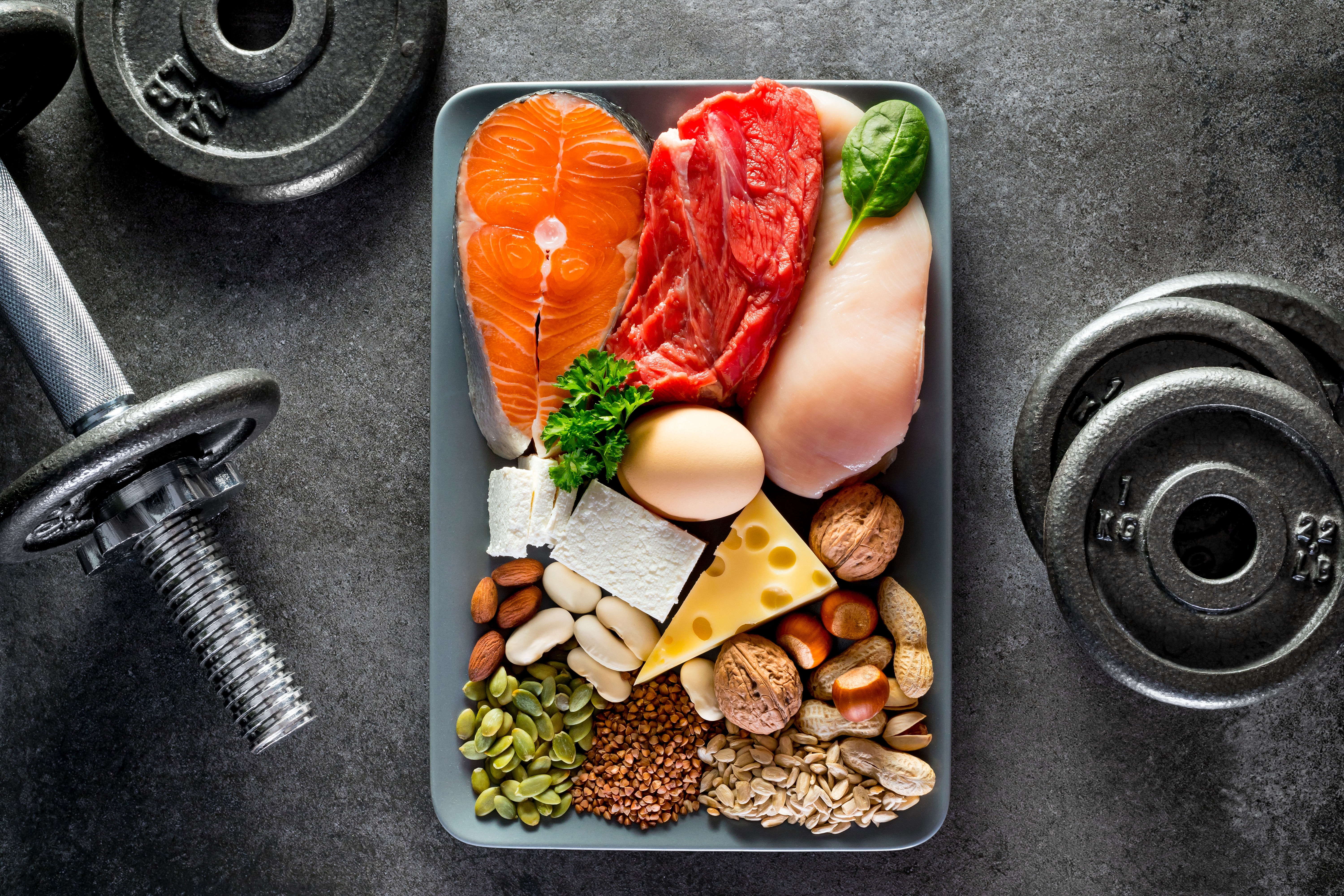
Our recommendations for optimal metabolic and overall health and vitality:
- Eat: 20-40g of high-quality protein per meal, 3-6 times per day
- Eat: high fibre foods including fresh fruit and vegetables, beans, pulses, nuts, and seeds
- Avoid highly processed foods
- Move daily. Ideally in a manner you enjoy that fits into your schedule. Bonus points if the movement is occasionally intense (i.e., very challenging).
- LIFT. Compound movements, using weight that is heavy enough to challenge you within 5-12 repetitions while keeping strong, safe form. 2+ times per week. Aim for 90+ minutes of lifting every week. This can be accumulated over multiple days (for example, lift 21-25 minutes, 4 days a week).
If you would like a hand understanding how to tweak your own exercise or nutrition to optimize your health, we’d love to help. Members at the Toronto Athletic Club can connect with Meg, while those at the Cambridge Club can connect with Sean.
References:
Bellicha A, van Baak MA, Battista F, et al. Effect of exercise training on weight loss, body composition changes, and weight maintenance in adults with overweight or obesity: An overview of 12 systematic reviews and 149 studies. Obes Rev. 2021;22 Suppl 4(Suppl 4):e13256. doi:10.1111/obr.13256
Berg S, Stickle H, Rose SJ, Nemec EC. Discontinuing glucagon-like peptide-1 receptor agonists and body habitus: A systematic review and meta-analysis. Obes Rev. 2025 Aug;26(8):e13929. doi: 10.1111/obr.13929. Epub 2025 Apr 4. PMID: 40186344.
Jensen SBK, Fiorenza M, Juhl CR, et al. Physical Fitness with Exercise and GLP-1 Receptor Agonist Treatment Alone or Combined After Diet-Induced Weight Loss: A Secondary Analysis of a Randomized Controlled Trial in Adults with Obesity. Sports Med. 2026;56(7):1785-1800. doi:10.1007/s40279-025-02386-0
Sancho-Haro, E., Muñoz-López, M., Baz-Valle, E., Villanueva-Tobaldo, C. V., Tornero-Aguilera, J. F., López-Gil, J. F., López-Moreno, M., Martín-Rodríguez, A., & Clemente-Suárez, V. J. (2026). Optimizing Weight Loss in the GLP-1 Era: Preserving Muscle Mass, Function and Metabolic Health Through Precision Nutrition and Resistance Training. Pharmaceuticals, 19(6), 897. https://doi.org/10.3390/ph19060897
Quimbayo-Cifuentes AF. Weight Regain After GLP-1-Based Therapy Discontinuation: Failure, Physiology, or Follow-Up Gap. Cureus. 2026;18(2):e104259. Published 2026 Feb 25. doi:10.7759/cureus.104259
0